Last updated: Jun 18, 2026
It's 6:47pm on a Friday. A homeowner's pipe just burst. They search Google, find your number, and call. They get voicemail.
By the time you see the missed call Saturday morning, they've already booked with whoever answered. That job, worth anywhere from $150 to $1,500+, is gone. Not because your pricing was wrong. Not because your work isn't good. Because your phone line went dark at the exact moment that lead was ready to hire.
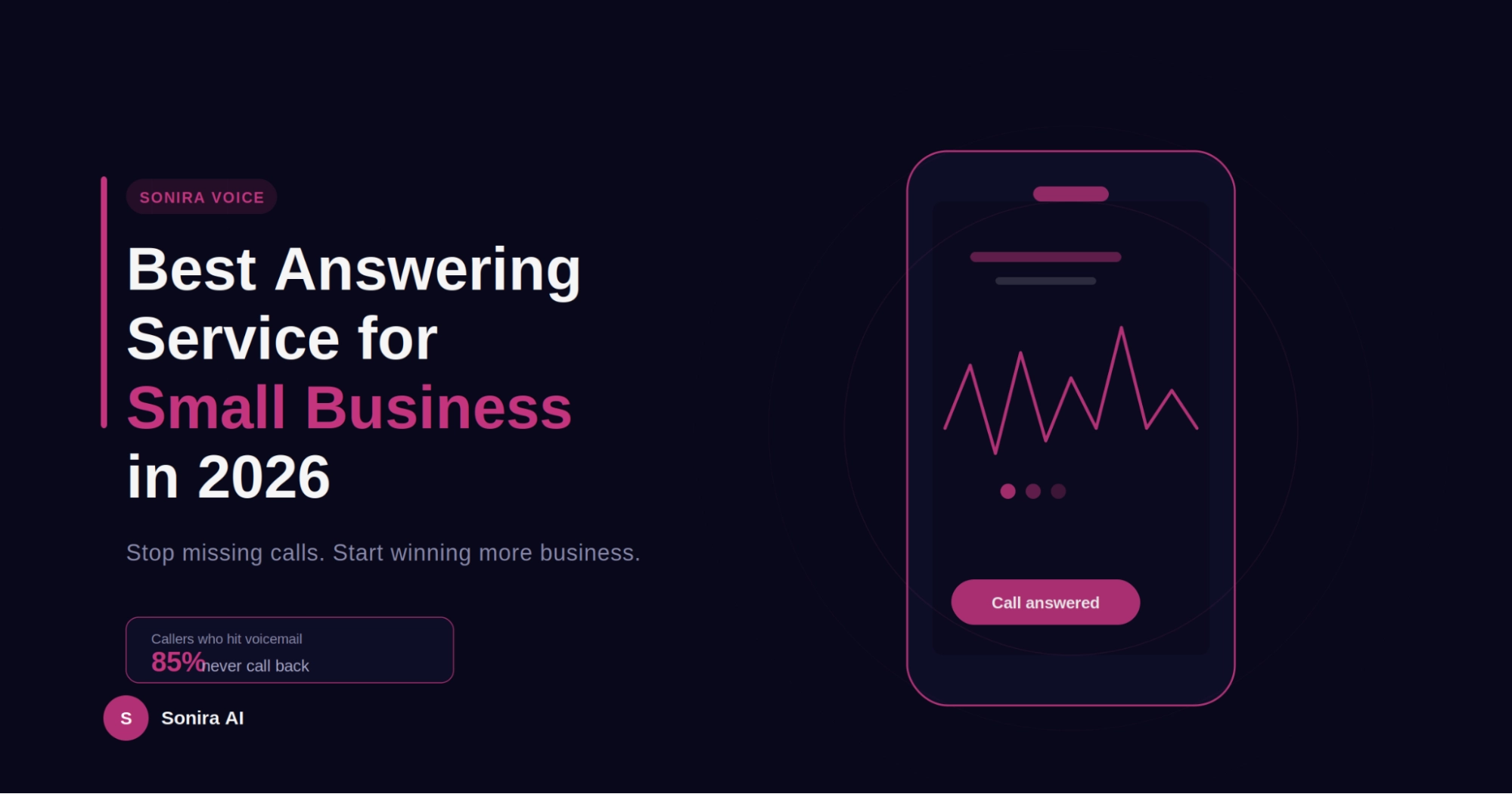
This isn't a one-off scenario. 85% of callers who reach voicemail never call back. They don't wait. They move to the next business on the list, and that's your competitor.
The Real Problem: Your Phone Line Has Gaps

Most business owners think of missed calls as a customer service problem. It isn't. It's a sales infrastructure failure, and it's measurable.
A typical service business operates 9am to 5pm, five days a week. That's 40 hours of coverage out of a possible 168 hours in a week. The other 76% of the time? The phone goes to voicemail.
And the calls that come in during those dark hours aren't casual browsers. They're people with a problem, a decision already made, and a list of businesses to try. Whoever answers first wins the job.
34% Of all inbound calls to home service businesses arrive outside standard hours, evenings, weekends, and holidays. These callers have the highest buying intent of the week.
The fix isn't working longer hours. It's building a call handling system that works when you don't. That's what the best phone answering service for small business does in 2026.
📖 Related: The Front Desk Is Dead: Missed Calls Are Your Quietest Revenue Leak
The 4 Answering Models in 2026, Compared

Not all answering services are equal. Here's how the four most common options stack up, and why the difference matters at real call volumes.
Response Time

- Traditional Service: 30–60 sec (hold)
- Virtual Receptionist: 20–45 sec
- Sonira AI: Instant (0–1 rings)
After-Hours Coverage
- Traditional Service: Extra fees
- Virtual Receptionist: Limited
- Sonira AI: 24/7/365 - included
Cost Model
- Traditional Service: Per-minute ($2.50+)
- Virtual Receptionist: High monthly tiers
- Sonira AI: $100/mo base + $0.005/min
Lead Qualification
- Traditional Service: Message only
- Virtual Receptionist: Moderate script
- Sonira AI: Full - every call
CRM Sync
- Traditional Service: Manual / email
- Virtual Receptionist: Basic
- Sonira AI: Native - automatic
Appointment Booking
- Traditional Service: No
- Virtual Receptionist: Sometimes
- Sonira AI: Yes, real time
The gap between a traditional service and Sonira AI isn't just speed, it's what happens on the call. A human operator takes a message. Sonira qualifies the lead, books the appointment, and syncs everything to your CRM before the call even ends.
📖 Related: AI Receptionist Cost in 2026: Complete Pricing Breakdown
Why Traditional Answering Services Fall Short
Most small businesses try at least one of these before switching to AI. Here's why each one eventually creates the same problem it was supposed to solve.
The consistency gap
Human operators juggle dozens of client accounts simultaneously. They mispronounce your business name, miss industry-specific terminology, and deliver a different experience depending on who picks up that day. Your brand reputation is only as consistent as the person who answered.
The billing trap
Virtual receptionist costs spike with volume. A successful marketing campaign that drives more calls means a bigger invoice at the end of the month, the opposite of what growth should feel like. Sonira's usage-based pricing ($100/month base + $0.005/minute) keeps costs predictable regardless of how busy you get.
The action void
Traditional services take a message and stop. They don't qualify the lead, they don't book the appointment, and they don't follow up. Your team wakes up to a list of cold callbacks instead of a pipeline of vetted, ready-to-convert prospects.
The hours problem
A traditional after-hours call answering service that routes to voicemail after 5pm isn't a solution, it's a gap with a professional voicemail greeting. Leads don't care about your office hours. They care about who answers.
What Sonira Delivers, Outcome by Outcome
Every feature Sonira offers exists to solve a specific revenue problem. Here's what that looks like in practice.
Every call answered in 0-1 rings(24/7: no gaps, no voicemail): No more waking up to missed opportunities. Every call that comes in, at 2pm on a Tuesday or 11pm on a Saturday, gets answered immediately with the same professional experience.
Lead qualification on every call(New or existing · urgency · need): Your team receives vetted leads, not cold callbacks. Sonira gathers the caller's name, reason for calling, urgency level, and contact details before the conversation ends. Monday morning starts with a sorted pipeline, not a message log.
Sentiment-driven escalation(Detects urgency in real time): When a call needs a human: high value, genuine emergency, frustrated customer, Sonira transfers immediately with full context attached. Your team steps in prepared, not blind.
Automatic CRM sync(Zero manual data entry): Call summary, lead details, follow-up priority: all logged automatically after every interaction. No sticky notes. No 'I thought someone else was handling that.'
Appointment booking(Real-time scheduling): Callers who are ready to book don't have to wait until your office opens. Sonira handles the scheduling directly so you wake up with confirmed jobs already in the calendar.
Every call becomes a workflow. Answer, qualify, route; Sonira AI handles the inbound call system so your team handles the work that actually needs them.
Sonira AI is part of the broader Sonira engagement ecosystem: connecting voice operations with Sonira Social's publishing tools so businesses capture demand and stay visible in the places people look before they ever pick up the phone.
📖 Related: Call Routing Best Practices for Service Businesses
The Cost Case, What You're Actually Paying For
A traditional answering service at $2.50/minute handling 100 calls per month runs $500–$700/month, just to take messages. Sonira handles the same volume, qualifies every lead, syncs to your CRM, and books appointments for around $101.50/month.
That's not a rounding error. It's a structural difference in how the two models work.
- $700 → $101.50: What switching from a traditional answering service to Sonira AI looks like at 100 calls/month (avg 3 min/call). Same 24/7 coverage. Full qualification. CRM sync included. 85% lower cost.*
The real ROI isn't the monthly savings. It's what a single recovered after-hours call is worth. HVAC repairs range from $150 to $1,500+. Law firm intake calls are worth $5,000–$15,000 in retained client value. Sonira pays for itself within the first recovered call of the month, every month.
📖 Related: How Voice Agents Are Transforming Customer Service
Checklist: What to Look for in a Phone Answering Service
Before signing up for any answering service, run through this list. A 10/10 solution should check every box.
✓ 24/7 coverage, truly always on. Not 'extended hours.' Not 'after-hours add-on.' Every call answered, every hour, including weekends and holidays, at no extra charge.
✓ Real lead qualification, not message taking. The service should ask your questions, identify urgency, and deliver vetted leads. A name and a callback number is not qualification.
✓ Transparent, predictable pricing. Understand exactly what you pay per call and per minute. Avoid services that bury overage rates or charge extra for after-hours coverage.
✓ Automatic CRM sync. Every interaction should flow into your system automatically. Manual data entry is a hidden cost that compounds every single day.
✓ Intelligent escalation. The system should know when to involve a human, and transfer with full context, not just a blind call transfer.
✓ Appointment booking capability. A service that can only take a message forces your team to make a cold callback. One that books directly converts the lead while buying intent is highest.
Stop missing the moments that turn into revenue.
Every call becomes a workflow. Sonira answers, qualifies, and routes, 24/7, starting at $100/month.
→ Book a free demo at sonira.ai
Frequently Asked Questions
What is the best answering service for a small business in 2026?
The best answering service for small businesses in 2026 is an AI voice agent like Sonira. It provides instant response, 24/7 coverage, real lead qualification, automatic CRM sync, and appointment booking, at a fraction of the cost of traditional human-operated services.
How much does a phone answering service cost?
Traditional phone answering services typically cost $250–$700/month, often billed per minute with surcharges for after-hours coverage. Sonira uses usage-based pricing, $100/month base plus $0.005/minute, making the all-in cost typically $100–$115/month at typical service business call volumes, with no after-hours surcharges.
What is an after-hours call answering service?
An after-hours call answering service handles inbound calls outside regular business hours, evenings, weekends, and holidays. Sonira runs 24/7 as standard, so every after-hours call is answered, qualified, and either booked or escalated, the same experience your daytime callers get.
How does Sonira handle urgent or high-value calls?
Sonira uses sentiment detection to identify urgency, high-value situations, or frustrated callers mid-conversation. When triggered, it live-transfers to your on-call team member with a full call summary already attached, so your team steps in with full context, not a blind transfer.
Is Sonira AI only for large businesses?
No. Sonira is built specifically for growing service businesses, from solo operators to multi-location companies, who need enterprise-level call handling without the enterprise overhead. The usage-based pricing model means you pay for what you use, nothing more.
How does Sonira support my existing front desk team?
Sonira handles inbound call volume, after-hours coverage, overflow, and routine qualification automatically, freeing your team to focus on in-person service and complex interactions. For situations that genuinely need a human, Sonira escalates instantly with full context so nothing falls through the cracks.
About Sonira
Sonira AI is an AI voice agent platform that helps service businesses answer, qualify, and route every inbound call, 24/7, automatically, starting at $100/month. Part of the Sonira engagement ecosystem alongside Sonira Social, Sonira AI is built for operators who want better coverage, faster response, and fewer missed opportunities.